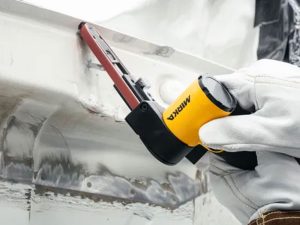
1. Reduced Cleanup Time
One of the biggest challenges on large projects is post-sanding cleanup. Traditional sanding can leave dust on floors, walls, equipment, and finished surfaces.
With a dust-free sanding system, most airborne particles are collected immediately during operation. This significantly reduces cleaning time and allows teams to move faster between project stages.
2. Faster Workflow Efficiency
Dust accumulation often slows down productivity by affecting visibility and contaminating work surfaces. Workers may need to stop frequently for cleaning and maintenance.
Dust-free systems help maintain a cleaner workspace, allowing professionals to continue sanding without interruptions. This improves workflow consistency and helps large projects stay on schedule.
3. Longer Abrasive Lifespan
Dust particles can quickly clog traditional sandpaper, reducing sanding performance and forcing users to replace abrasives more often.
High-quality mesh abrasives are designed to allow continuous airflow and dust extraction, helping the abrasive maintain cutting efficiency for longer periods.
This means:
- Fewer abrasive replacements
- Lower material costs
- More consistent sanding results
How Dust-Free Sanding Saves Money
Lower Labor Costs
Time is one of the largest expenses in large projects. When workers spend less time cleaning dust and replacing clogged abrasives, labor efficiency improves significantly.
By reducing unnecessary downtime, businesses can complete projects faster and increase productivity without increasing workforce costs.
Reduced Maintenance and Repairs
Airborne dust can damage tools, ventilation systems, and nearby equipment over time. Dust-free sanding helps protect machinery and reduces maintenance requirements.
Cleaner environments also reduce contamination risks during painting, coating, and finishing processes.
Improved Workplace Safety
Excessive sanding dust can affect indoor air quality and create health risks for workers. Cleaner air improves workplace comfort and helps businesses maintain safer working conditions.
According to Occupational Safety and Health Administration, controlling airborne dust is important for maintaining safer industrial environments.
Industries That Benefit from Dust-Free Sanding
Many industries can improve efficiency and cost savings through dust-free sanding systems, including:
- Woodworking and furniture manufacturing
- Automotive refinishing
- Construction and drywall finishing
- Marine surface preparation
- Industrial manufacturing
Professional contractors and workshop owners increasingly rely on modern sanding systems to maintain productivity while achieving high-quality finishes.
Why Professionals Choose Mirka Tools
Professionals across multiple industries choose Mirka Tools for advanced sanding technology, ergonomic tool design, and reliable dust extraction performance.
Mirka’s sanding systems are designed to:
- Improve sanding efficiency
- Reduce airborne dust
- Deliver smoother finishes
- Support long-term productivity
- Lower operational costs
Whether handling woodworking, automotive, or industrial projects, dust-free sanding solutions help professionals maintain cleaner and more efficient work environments.
Conclusion
Dust-free sanding is more than just a cleaner sanding method — it is a smarter investment for large projects. By reducing cleanup time, improving abrasive performance, enhancing safety, and increasing workflow efficiency, businesses can save both time and money.
Modern sanding technology continues to help professionals achieve better finishing results while maintaining cleaner and safer workspaces.
For professional-grade sanding solutions and advanced dust extraction systems, explore the latest innovations available at Mirka Tools.


Add comment